Event · discovery
Europa life
Microbes only.
Read more in Life beyond Earth
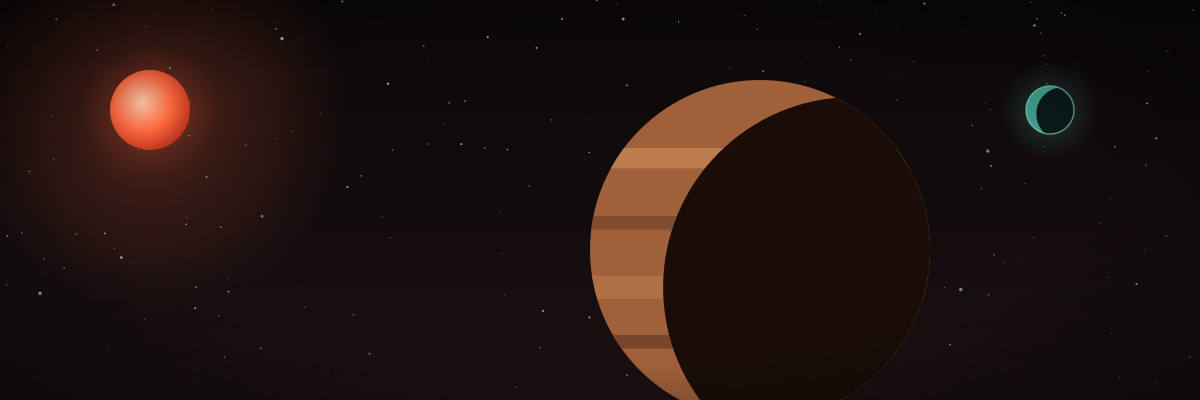
A giant planet around Alpha Centauri A was first glimpsed as a candidate by the James Webb Space Telescope in 2025. Later surveys confirm it, and find it has a large moon, Veil, with a thick ice shell over a tidally warmed ocean. Lantern Probe flybys imaged it in the 2150s, and surveys from Proxima, only 0.2 light-years away, have mapped its hidden ocean — but from outside, all anyone can see is ice, and life sealed under kilometres of it would leave no trace a telescope can read. Since life was found in Enceladus and Europa, the Settlement has banned penetrating any alien ocean until a probe can be certified sterile, and since the 2450s the Concord Accord's ban on disturbing alien biospheres has bound every bloc, so nobody has looked inside.
Venus (2480s onward). After the phosphine claim of 2020, Venus was held untouched under the Venus Question until its clouds could be surveyed, as Europa is now. The surveys found no life and the phosphine proved to be non-living chemistry, but a whole cloud deck can never be proved empty, so the Question was never fully closed. The Vesta Crisis taught the Parishad that a bloc must own its supplies, and the one it could not own was nitrogen, which every habitat's air needs and which came from the Settlement's Titan. Venus's air holds about three times the nitrogen of Earth's whole atmosphere. In the late 2480s the Parishad began the Shukra stations, cloud cities about 50–55 km up, where the pressure is near 1 bar and the heat Earth-like, and where breathable air is a lifting gas, so the habitats float on their own air. The Settlement invoked the Venus Question to stop them; the Parishad answered with the surveys. By 2497 about 2 million people live there and the first nitrogen ships have sailed, beginning to break Titan's hold. The Venus sunshade planned in the Mirror Race remains a plan.