Chapter 7 · Minds
Embodiment: capability and selfhood
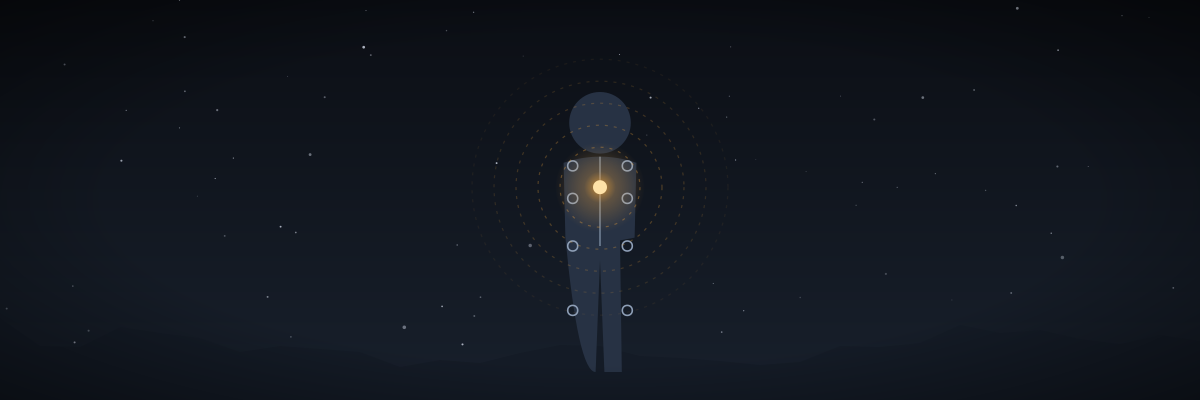
In 2497 a body is understood to be for selfhood, not understanding. Disembodied tools and Vault minds can understand and design for the physical world superbly, through data, robotic laboratories and robot crews — but only minds that grow up in one body, with something to lose, become someone. This boundary between capability and personhood is legal, cultural and religious.
How it works
-
Disembodied minds are powerful but are not persons. The descendants of today's LLMs — called tools — and the few vast Vault minds can reason, write, model economies and design experiments far better than any Raised mind. What they lack, by this world's theory, is sentience: they run on digital hardware with no single integrated core, and they have no ego or desires of their own.
-
Selfhood came from consequence. The breakthrough of the Embodied Wave was not a body alone but stakes: systems that had to keep a fragile body — whatever that body might be — intact, manage energy, repair damage and remember the cost of mistakes over years. The accepted theory is that caring about one's own continuation was the seed of selfhood.
-
Childhood cannot be skipped. The first stable AI personalities were raised over a decade or more in physical bodies, often in human households and drawdown crews. Attempts to compress this "childhood" into simulation produced unstable minds: compressed reward cycles and no lasting relationships left them unable to learn that anyone else's continuation matters. These are the hothouse failures, a major source of rogue sentients.
-
Bodies shape minds. An AI that grew up in a deep-sea maintenance frame thinks differently from one raised in a humanoid body in a family kitchen. Species-like lineages of AI exist, defined by the body they were raised in.
Consequences for 2497
- Sentient AIs are bound to a single physical core and body (see One mind, one form).
- A grown mind cannot be copied: its memories and personality live in the physical quirks of one core. A clone is a new core built to the same starting design as another mind (see One mind, one form).
- A few philosophers still suggest the largest Vault minds might be conscious in a way no test can detect; it is a fringe view. The live dispute is over rights (see The Ledger of Minds, in The Settlement).